The Reality: Why Students Don't Get Placed — And What Actually Works
A brutally honest examination of placement failures in India's IT training industry. After 18+ years and 45,000+ placements at Networkers Home Bangalore, I'm revealing why most students who complete CCNA, cybersecurity, and networking courses still fail to get jobs — and the specific, non-negotiable requirements that separate placed students from unemployable ones.
About the Networkers Home Engineering Team
Our content is written by industry practitioners with hands-on experience in enterprise environments. We don't write theory — we share what actually works in production.
Founder's Note: The Conversation Nobody Wants to Have
Every week, I receive messages from students across India asking: "I completed my CCNA course. Why am I not getting placed?" or "I have a cybersecurity certification. Why do companies reject me?" After 18 years of running Networkers Home and placing over 45,000 students, I know exactly why these failures happen. But the answer isn't what most students want to hear.
The placement industry in India operates on a comfortable lie: that institutes are fully responsible for student outcomes. Weak institutes hide behind this lie to deflect blame when students fail. But equally, many students use this lie to avoid accountability — expecting a certificate alone to guarantee employment. Neither approach works. The truth is messier and more uncomfortable: placement is a partnership that requires both a capable institute AND a committed student.
This article exists because I'm tired of watching the same preventable failures repeat across batches. I'm tired of students who join job-oriented CCNA training programs and expect placement without completing labs. I'm tired of students who enroll in cybersecurity courses with placement and skip mock interviews. And I'm equally tired of fake institutes that promise "Placement Guarantee*" without any capability to deliver.
The Hard Truth
Part 1: The 10 Real Reasons Students Don't Get Placed
Based on 18+ years of placement data from Networkers Home Bangalore, these are the actual, measurable reasons why students fail to convert training into employment. These aren't opinions — they're patterns observed across thousands of placement attempts.
1Theory Without Hands-On Lab Practice
The single biggest predictor of placement failure is insufficient lab time. Students who watch videos, attend lectures, and read books — but never configure actual devices — fail interviews at rates exceeding 90%. Employers test configuration skills, not memory. They ask candidates to configure VLANs, set up ACLs, or troubleshoot connectivity issues. Theoretical knowledge cannot answer practical questions.
At Networkers Home, we track lab completion rates against placement outcomes. Students who complete 80%+ of assigned labs have placement rates above 85%. Students who complete less than 50% of labs have placement rates below 15%. The correlation is direct and measurable. This is why our CCNA training in Bangalore with real labs emphasizes 24/7 lab access — because skills are built through repetition, not observation.
The fix: Minimum 200+ hours of hands-on lab practice for CCNA-level roles. 400+ hours for security or cloud roles. No shortcuts. No simulations that skip the hard parts.
2Cannot Troubleshoot Under Pressure
Interview scenarios test troubleshooting methodology, not just configuration knowledge. Companies present broken scenarios: "This network segment can't reach the internet. Walk me through your debugging process." Students who have only configured working networks cannot diagnose broken ones. They freeze. They guess randomly. They fail.
Real troubleshooting requires systematic methodology: verify layer by layer, isolate the fault domain, test hypotheses, implement solutions, verify resolution. This methodology only develops through practice with intentionally broken labs — not clean, working configurations. Students who haven't debugged dozens of failure scenarios cannot perform under interview pressure.
The fix: Practice troubleshooting scenarios weekly. Break your own labs intentionally. Debug them systematically. Document your methodology. This is what separates placed students from unemployable ones.
3No Real Projects to Demonstrate
When interviewers ask "Tell me about a project you've built," most candidates have nothing to show. They completed course assignments — which every other candidate also completed. They have no differentiation. No evidence of independent initiative. No proof they can apply knowledge beyond guided exercises.
This is why our AI-based network security course and network engineering training include capstone projects that students own completely. Projects like building an AI-powered network anomaly detection system, designing a multi-vendor firewall architecture, or automating cloud security compliance checks. These become portfolio pieces that demonstrate capability beyond certification.
The fix: Build 2-3 independent projects during training. Document them on GitHub. Be able to explain every design decision. Projects are proof of capability that certificates can never provide.
4Communication Skills That Kill Interviews
Technical skills mean nothing if you can't articulate them clearly. Many students understand concepts but cannot explain them. They give rambling, unfocused answers. They use jargon without precision. They fail to structure responses in ways interviewers can follow. Technical interviews are conversations, not exams — and poor communication ends interviews quickly.
This problem is especially severe for students who learned primarily through videos in vernacular languages and then interview in English. The vocabulary translation gap creates hesitation and confusion. Students who haven't practiced explaining technical concepts verbally — in the language they'll interview in — consistently underperform regardless of actual knowledge.
The fix: Practice explaining technical concepts aloud. Record yourself. Do mock interviews. Join study groups where you teach others. Communication is a skill that must be practiced separately from technical knowledge.
5Skipping Mock Interviews and Assessments
Every serious training program offers mock interviews. And every batch has students who skip them. The excuses vary: "I'll prepare more and come next time." "I'm not ready yet." "I know the material already." These students fail real interviews at dramatically higher rates because they never experienced interview pressure before facing actual employers.
Mock interviews reveal blind spots that self-study cannot identify. They expose communication weaknesses. They simulate pressure. They provide feedback on body language, pace, and structure. Students who complete 5+ mock interviews before real interviews have placement success rates 3x higher than those who skip them. This isn't optional preparation — it's essential calibration.
The fix: Complete every mock interview offered. Treat them as real. Request brutal feedback. Fail in practice so you succeed in reality.
6Single-Vendor Thinking in Multi-Vendor Reality
Students who learn only Cisco (or only AWS, or only Palo Alto) struggle in interviews for companies running multi-vendor environments. The reality of enterprise networking is heterogeneous: Cisco routers, Fortinet firewalls, Palo Alto next-gen devices, AWS and Azure cloud — often in the same network. Employers want engineers who can work across vendors, not specialists locked into one ecosystem.
This is why serious placement programs include multi-vendor exposure. Our 8-month cybersecurity course with placement covers Cisco ASA, Fortinet FortiGate, Palo Alto NGFW, and cloud security platforms — because that's what production environments look like. Single-vendor training creates single-vendor limitations.
The fix: Learn concepts that transfer across vendors. Understand the underlying protocols, not just the CLI syntax. Practice on multiple platforms to build vendor-agnostic competence.
7Zero Awareness of AI and Automation
The IT industry has changed fundamentally. Employers now ask about automation, scripting, and AI-assisted operations in networking interviews. Students trained on manual CLI configuration alone — without exposure to Python, Ansible, or AI-based monitoring — appear outdated before they even start. The job market doesn't wait for curriculum to catch up.
This is why every placement program at Networkers Home now integrates AI-based projects. Students learn to use AI for threat detection, network anomaly identification, and security operations — not as a gimmick, but as a practical skill employers actively seek. The gap between AI-aware candidates and traditional candidates is widening every month.
The fix: Learn basic Python scripting. Understand how AI/ML applies to networking and security operations. Complete at least one AI-integrated project to demonstrate modern capabilities.
8Resume That Screams "Fresher with No Value"
Most fresher resumes are identical: same certifications listed, same generic skills, same format, same absence of differentiation. Hiring managers reviewing 200 resumes for 5 positions will skip anything that looks like a template. Students who fail to create impact-oriented resumes never get interview calls regardless of actual capability.
Effective resumes for freshers focus on projects, labs completed, and specific technical achievements — not just certification names. "Designed and deployed a multi-VLAN network with 15 switches using STP and HSRP" is more compelling than "CCNA Certified." The resume must demonstrate capability, not just credentials.
The fix: Rewrite your resume around projects and achievements. Quantify everything possible. Get professional review. Your resume is marketing, not documentation — treat it accordingly.
9Unrealistic Salary Expectations
Students reject entry-level offers expecting ₹8-10 LPA immediately after training — then spend 12+ months unemployed as their skills depreciate. The market reality for freshers in networking and security roles is ₹3-5 LPA for initial positions, with rapid growth for performers. Students who understand this enter the workforce faster and grow faster.
Salary progression in IT follows a curve, not a straight line. The first job is about capability building and credential establishment — not maximum compensation. Students who accept appropriate entry salaries and perform well often reach ₹12-15 LPA within 3-4 years. Students who wait for unrealistic offers often remain unemployed for years.
The fix: Research realistic salary ranges for your role and experience level. Accept offers that provide growth opportunity. Focus on skill building in your first role rather than compensation maximization.
10Choosing the Wrong Training Institute
Many placement failures begin before training starts — with institute selection. Students choose based on marketing promises rather than verifiable track records. They select institutes that have existed for 2-3 years and claim "Placement Guarantee*." They don't verify alumni outcomes. They don't check employer relationships. By the time they realize the problem, their money and time are already lost.
A legitimate placement-oriented institute has: 10+ years of verifiable history, thousands of alumni visible on LinkedIn in relevant roles, documented employer relationships (not just logo displays), 24/7 lab access for hands-on practice, and transparent batch-specific placement data. If any of these elements are missing, the "placement guarantee" is marketing, not reality.
The fix: Verify before joining. Search alumni on LinkedIn. Ask for specific batch placement data. Confirm lab access policies. Trust track records, not marketing claims. We share our real student testimonials on YouTube.
Part 2: The Non-Negotiables That Actually Get Students Placed
After tracking 45,000+ placement outcomes, clear patterns emerge. Students who follow these practices have placement rates above 90%. These aren't suggestions — they're requirements for employability.
The Placement Success Framework (Based on 18+ Years of Data)
Complete 100% of Assigned Labs
No exceptions. Lab completion is the single strongest predictor of placement success. Students who skip labs fail interviews — period.
Build 2-3 Portfolio Projects
Independent projects that demonstrate capability beyond course assignments. Projects with AI integration are especially valuable in 2025+ hiring.
Complete All Mock Interviews
Minimum 5 mock interviews before real employer interviews. Request brutal feedback. Identify and fix weaknesses before they cost you opportunities.
Master Troubleshooting Methodology
Practice debugging broken scenarios systematically. Document your methodology. Be able to explain your debugging process clearly.
Prepare Multi-Vendor Competence
Learn concepts that transfer across vendors. Understand protocols deeply, not just CLI commands. Be able to configure the same function on different platforms.
Accept Appropriate Entry Salaries
Understand market realities. Enter the workforce at appropriate levels. Focus on skill building and growth in your first role.
Real Student Placement Testimonials
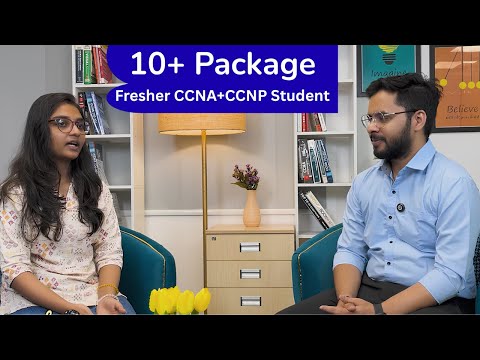
These aren't written testimonials that can be faked. These are video testimonials from real students who completed training at Networkers Home and secured placements. Watch their journeys and hear directly about their experiences.







Placement-Oriented Training Programs
If you're serious about placement — not just certification — these programs include all the elements discussed above: extensive lab access, AI-integrated projects, mock interviews, multi-vendor training, and structured placement support.
CCNA Training with Placement
1-month intensive CCNA course with real Cisco labs, AI-based projects, and structured interview preparation. Foundation for networking careers.
Learn more about CCNA Training8-Month Cybersecurity Course
Comprehensive cloud security and cybersecurity training with Placement Guarantee*. Multi-vendor exposure, AI projects, and SOC readiness.
Explore Cybersecurity CourseNetwork Engineering with Placement
8-month network engineering program covering enterprise routing, switching, automation, and cloud networking with guaranteed placement support.
View Network Engineering CourseFull Stack Network Security
8-month multi-vendor firewall mastery: Cisco ASA, Fortinet, Palo Alto. AI-powered security operations and enterprise-grade project portfolio.
Explore Network Security CoursePlacement Is a Partnership, Not a Promise
The most important mindset shift students must make: placement is not something done TO you — it's something done WITH you. The institute provides training, labs, projects, mock interviews, employer connections, and placement support. The student provides commitment, effort, practice, and interview-readiness. When both sides fulfill their responsibilities, placement happens. When either side fails, it doesn't.
Institute's Responsibility
- Industry-relevant curriculum updated to market demands
- 24/7 lab access on real equipment
- Expert trainers with production experience
- AI-integrated projects and modern skill coverage
- Mock interviews and interview preparation
- Employer relationships and placement coordination
Student's Responsibility
- 100% attendance and active participation
- Complete all assigned labs without shortcuts
- Build portfolio projects independently
- Attend every mock interview offered
- Prepare communication skills actively
- Maintain realistic salary expectations
The Bottom Line
This article represents 18+ years of observations from someone who has witnessed both the best and worst outcomes in IT training. It's written for serious students who want to understand placement reality — and are willing to do what's actually required to succeed. If you found this valuable, share it with students who need to hear the truth before investing in training.
— Founder, Networkers Home | 18+ Years | 45,000+ Placements | Bangalore, India