Placement Process in IT Training Institutes: Complete Transparency Guide
A comprehensive guide revealing exactly how placement works in IT training institutes. After 18+ years and 45,000+ placements at Networkers Home Bangalore, I'm documenting the complete workflow — from enrollment to job offer — including the eligibility criteria that filter out 70% of students and the interview preparation that separates placed candidates from rejected ones.
About the Networkers Home Engineering Team
Our content is written by industry practitioners with hands-on experience in enterprise environments. We don't write theory — we share what actually works in production.
Founder's Note: Why Placement Transparency Matters
Every week, parents call our Bangalore center asking a simple question: "What is your placement process?" But the answer they expect — "We place students automatically after the course" — is fundamentally wrong. No legitimate IT training institute operates that way. And any institute that claims to guarantee automatic placement is either lying or operating an employment scam.
The real placement process is rigorous, structured, and highly selective. It requires active participation from students at every stage. It filters out candidates who haven't developed job-ready skills. It connects prepared students with hiring companies — but it cannot create skills where none exist. Understanding this process completely is the first step toward actually getting placed.
This guide documents exactly how placement works at Networkers Home — and by extension, how it works at any legitimate IT training institute. Whether you're considering CCNA training with placement assistance, an 8-month cybersecurity course with placement, or network engineering training, this process applies uniformly.
Core Principle
Part 1: The Complete Placement Workflow (7 Stages)
Placement at a legitimate IT training institute follows a structured 7-stage workflow. Each stage has specific requirements that students must meet before advancing. Failure at any stage disqualifies the student from subsequent stages until they correct the deficiency.
1Enrollment & Program Selection
The placement process begins at enrollment — not after course completion. Students choosing placement-focused programs (like our 8-month network security course) are immediately registered in the placement pipeline. Short-term certification courses like the 1-month CCNA provide placement assistance but with different scope than comprehensive programs.
Placement-Focused Programs
- • 8-month Cloud Security & Cybersecurity
- • 8-month Network Engineering
- • 8-month Full Stack Network Security
- • Full placement cell access
- • Dedicated interview preparation
Short-Term Certification
- • 1-month CCNA foundation
- • Individual certification courses
- • Job portal access
- • Resume assistance
- • Referral-based placement support
2Training Phase: Skill Development
During the training phase, students develop both technical skills and professional competencies. This is where the placement-eligible pool starts getting filtered. Students who skip labs, miss classes, or avoid practical exercises begin falling behind. By Month 4 of an 8-month program, the performance gap between serious and casual students becomes obvious.
What Gets Tracked During Training:
Technical Metrics
- • Lab completion percentage
- • Configuration accuracy
- • Troubleshooting speed
- • Project completion
Professional Metrics
- • Attendance consistency
- • Assignment submission
- • Team collaboration
- • Communication skills
AI Project Metrics
- • AI tool proficiency
- • Automation scripts
- • ML-based detection labs
- • Integration projects
3Eligibility Assessment: The First Filter
Before any student enters the placement pool, they undergo an eligibility assessment. This is the first major filter — and it eliminates approximately 30% of enrolled students. The assessment evaluates whether a student has developed minimum competencies required by hiring companies.
Eligibility Criteria (Non-Negotiable)
Students Who Fail Eligibility
- • Lab completion below 80%
- • Cannot configure basic scenarios
- • No AI project experience
- • Poor attendance record
- • Failed internal assessments
Students Who Pass Eligibility
- • All labs completed
- • Can configure & troubleshoot
- • AI projects documented
- • Professional resume ready
- • Mock interview cleared
4Interview Preparation Intensive
Eligible students enter a dedicated interview preparation phase. This isn't optional coaching — it's structured training in technical interviews, HR rounds, and practical demonstrations. Students who skip this phase rarely survive actual company interviews, regardless of their technical skills.
Interview Preparation Components:
Technical Preparation
- • Live troubleshooting scenarios
- • Configuration under pressure
- • Whiteboard network design
- • Tool demonstration practice
- • AI project presentations
Professional Preparation
- • HR round simulation
- • Behavioral questions
- • Salary negotiation guidance
- • Professional communication
- • Company research techniques
5Company Matching & Shortlisting
The placement cell maintains relationships with 800+ hiring partners across India. When companies share requirements, we match eligible students based on skill profiles, location preferences, salary expectations, and experience level. Not every student is suitable for every opportunity.
NOC Engineer Roles
Entry-level monitoring, CCNA foundation, shift work readiness
Security Analyst Roles
SIEM experience, threat detection, cybersecurity program graduates
Network Engineer Roles
Multi-vendor experience, advanced troubleshooting, CCNP-level skills
6Interview Scheduling & Support
Shortlisted students receive interview schedules with company details, JD analysis, and specific preparation guidance for that company. The placement cell provides pre-interview briefings and post-interview feedback. This support continues until the student either gets selected or exhausts reasonable opportunities.
What We Provide for Each Interview:
- • Complete job description analysis
- • Company-specific technical focus areas
- • Expected interview format and rounds
- • Salary range and negotiation guidelines
- • Post-interview debriefing and feedback
7Offer, Negotiation & Onboarding Support
When students receive offers, the placement cell assists with offer evaluation, salary negotiation guidance, and onboarding preparation. Our relationship with students doesn't end at offer — we track successful onboarding and early career progression to maintain employer relationships.
Part 2: Why Students Get Filtered Out at Each Stage
Understanding where students fail in the placement process is more valuable than understanding where they succeed. These failure points are predictable and preventable — if students take early corrective action.
Stage 2 Failures: Training Phase Dropouts (~20%)
Students who don't complete labs, skip classes, or fall behind in the curriculum. By Month 4, they've accumulated too much technical debt to recover.
Prevention: Maintain 90%+ attendance, complete every lab, ask questions early when stuck.
Stage 3 Failures: Eligibility Rejection (~30%)
Students who completed the course but lack demonstrable skills. They attended classes but never internalized the material. They cannot configure, troubleshoot, or explain what they learned.
Prevention: Focus on understanding, not completion. Build real projects. Practice until configuration becomes automatic.
Stage 4 Failures: Interview Preparation Skippers (~15%)
Technically competent students who don't prepare for interviews. They can configure networks but can't explain their work. They know the material but freeze under pressure.
Prevention: Treat interview preparation as seriously as technical training. Practice mock interviews until comfortable.
Stage 6 Failures: Interview Performance (~20%)
Students who are eligible, prepared, and shortlisted — but fail in actual interviews. This is often due to nervousness, poor communication, or inability to perform under observation.
Prevention: More mock interviews. More pressure practice. More exposure to unfamiliar scenarios. Persistence across multiple attempts.
Part 3: Course-Specific Placement Process Details
While the 7-stage workflow applies universally, each course track has specific placement criteria based on target job roles and industry expectations.
CCNA Training Placement Process
CCNA training with placement assistance follows a structured 1-month intensive format. As a short-term certification, the placement scope differs from comprehensive programs — but the quality standards remain identical.
CCNA Eligibility Requirements:
- • All 30 labs completed with accuracy
- • CCNA 200-301 topics mastered
- • Subnetting without calculator
- • Basic troubleshooting proficiency
- • Professional resume prepared
Target Roles for CCNA:
- • NOC Engineer (Entry Level)
- • Network Support Engineer
- • IT Support with Networking
- • Junior Network Administrator
- • Helpdesk with Network Focus
Reality Check: CCNA alone is a foundation, not a complete career solution. Most serious students continue to our 8-month placement programs for comprehensive job readiness.
Cybersecurity Course Placement Process
The 8-month cybersecurity course with placement has the most rigorous placement process due to industry demand for verified skills. Cloud security and SOC roles require demonstrable experience with AI-based threat detection.
Cybersecurity Eligibility Requirements:
- • All security labs completed (80+)
- • AI-based threat detection project
- • SIEM/SOAR tool proficiency
- • Cloud security fundamentals
- • Incident response simulation cleared
Target Roles for Cybersecurity:
- • SOC Analyst (L1/L2)
- • Cloud Security Engineer
- • Security Operations Engineer
- • Threat Detection Analyst
- • Security Automation Engineer
Network Engineering Placement Process
The 8-month network engineering course focuses on infrastructure roles requiring multi-vendor experience and advanced troubleshooting. Placement success depends heavily on hands-on lab proficiency.
Network Engineering Eligibility:
- • Multi-vendor configuration (Cisco, Juniper)
- • Advanced routing protocols (OSPF, BGP)
- • Network automation with Python/Ansible
- • Troubleshooting complex topologies
- • AI-based network monitoring project
Target Roles for Network Engineering:
- • Network Engineer
- • Infrastructure Engineer
- • Data Center Engineer
- • Network Automation Engineer
- • Cloud Network Engineer
Network Security Placement Process
The 8-month Full Stack Network Security course targets firewall engineering and security infrastructure roles. Multi-vendor firewall experience (Palo Alto, Fortinet, Cisco) is mandatory for placement eligibility.
Network Security Eligibility:
- • Multi-vendor firewall configuration
- • Zero trust implementation project
- • VPN and SSL decryption labs
- • Threat prevention policies
- • AI-based anomaly detection project
Target Roles for Network Security:
- • Firewall Engineer
- • Network Security Engineer
- • Security Infrastructure Engineer
- • Perimeter Security Specialist
- • Security Operations Engineer
Part 4: Placement Support vs Placement Guarantee — The Critical Difference
The IT training industry is plagued by institutes promising "Placement Guarantee*." This phrase should be an immediate red flag. Here's why:
"Placement Guarantee*" Claims
- • Mathematically impossible — no institute controls hiring decisions
- • Often involves fake companies or unpaid "internships"
- • Fine print excludes "non-compliant" students (everyone)
- • Focuses on marketing, not actual skill development
- • Creates unrealistic student expectations
- • Frequently involves placement fee scams
Legitimate Placement Support
- • Structured process with clear eligibility criteria
- • Access to verified hiring partners
- • Interview preparation and skill development
- • Multiple interview opportunities until placement
- • Transparent about student success rates
- • Honest about student responsibility in the process
Our Position
Real Student Testimonials: The Placement Journey
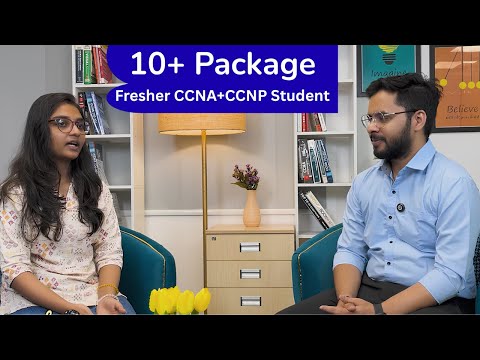
These students went through our complete placement process. Watch their experiences — both the challenges and the outcomes.







The Placement Success Framework
Stage 1: Enrollment
Choose placement-focused program, register in placement pipeline
Stage 2: Training
Complete all labs, develop real skills, build AI projects
Stage 3: Eligibility
Pass assessment, meet 80%+ lab completion, clear mock interview
Stage 4: Interview Prep
Technical and HR preparation, scenario practice, presentation skills
Stage 5: Shortlisting
Matched with suitable companies based on skill profile
Stage 6: Interviews
Multiple interview opportunities with ongoing support
Stage 7: Placement
Offer negotiation, onboarding support, career tracking
Final Thoughts: Placement Is a Partnership
The placement process in IT training institutes isn't a mystery — it's a structured system with clear stages, measurable criteria, and predictable outcomes. The students who succeed are the ones who understand the process, meet the criteria, and do the work. The students who fail are the ones who expect certificates to replace competence.
At Networkers Home, we've refined this process over 18 years and 45,000+ placements. We know exactly what works and exactly where students fail. This article documents that knowledge because informed students make better training decisions — and better-prepared students get placed.
If you're serious about placement, understand that you're entering a partnership. We provide the structure, the training, the company access, and the support. You provide the discipline, the effort, the skill development, and the interview performance. Neither side can succeed alone. Together, placement becomes predictable.
About the Networkers Home Engineering Team
Our content is written by industry practitioners with hands-on experience in enterprise environments. We don't write theory — we share what actually works in production.